Flatbed Towing in Pueblo, CO
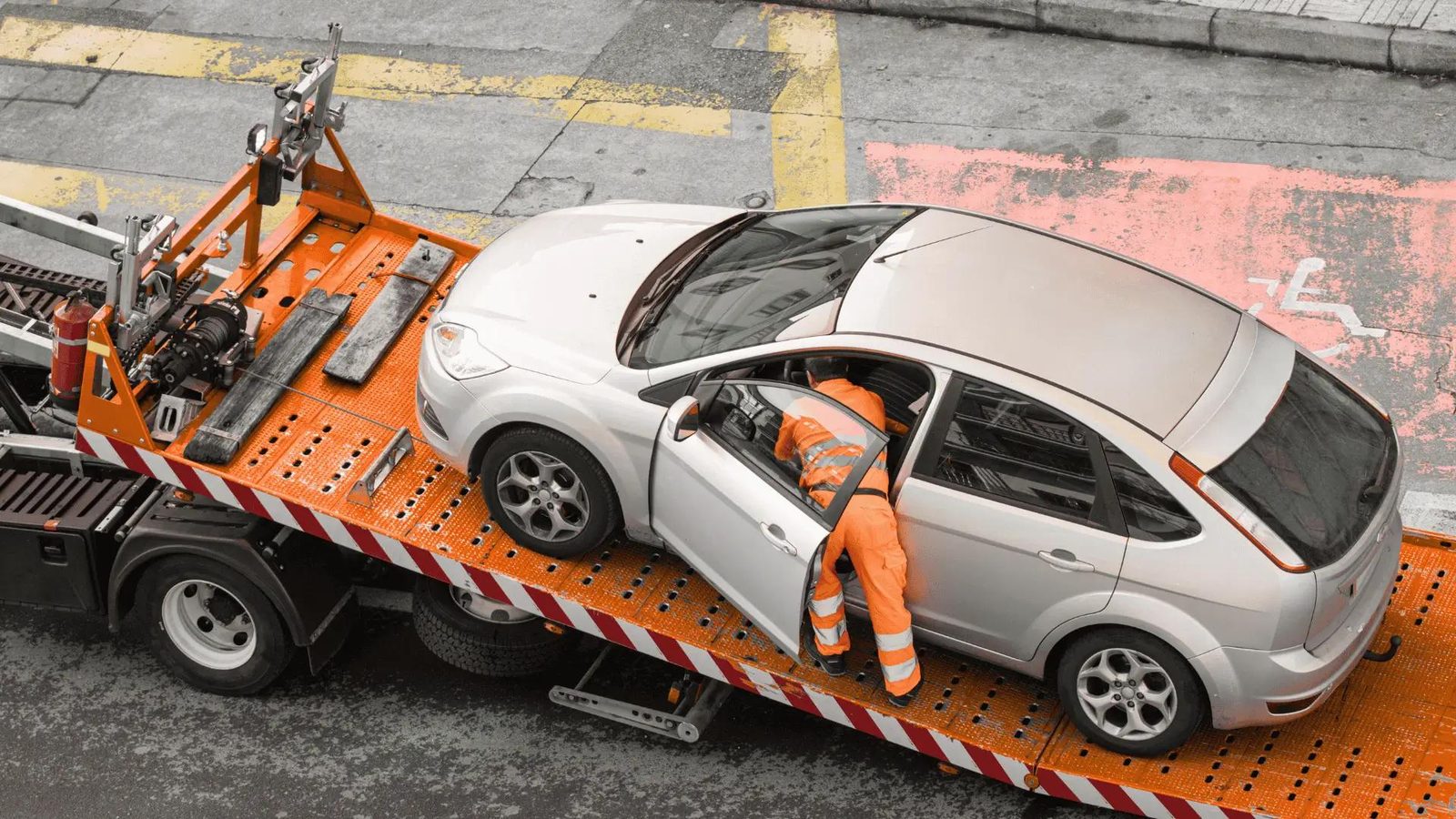
A flatbed, also called a rollback, carries your vehicle up on a deck with all four wheels off the ground. Nothing drags, nothing turns, and the drivetrain just rides along. For a lot of the vehicles on Pueblo roads today, a flatbed is not the fancy option. It is the correct one.
Ask for a flatbed when you call and we will send the right truck.
How flatbed towing works
- The truck backs up to your vehicle and the deck slides back and tilts down to the ground, making a ramp.
- A winch cable pulls the vehicle up the deck, or the driver rolls it up if it still rolls freely. A car that cannot roll can be pulled up on skates.
- The vehicle is secured at the wheels and frame points with straps, and the deck slides forward and levels out.
- Your vehicle rides flat to the shop, your home, or wherever you direct, and is unloaded by running the same process in reverse.
When a flatbed is the right call
- All wheel drive and 4x4 vehicles. An AWD vehicle towed with two wheels rolling can suffer real drivetrain damage. The AWD and 4x4 towing page explains the problem in detail. This covers a long list of Colorado regulars: Subarus, AWD crossovers and SUVs, and trucks that cannot be taken fully out of four wheel drive.
- Lowered cars and low sports cars. A hook and chain setup can scrape bumpers and exhausts. A flatbed deck with ramps loads a low car at a gentle angle.
- Classic and collectible cars. If the paint and chrome matter, a flatbed with soft wheel straps is how the car should travel.
- Wrecked vehicles. A car with a bent wheel, broken suspension, or locked steering still loads onto a deck. See the accident towing page for what happens at a crash scene.
- Motorcycles, trikes, and ATVs. Bikes only move on a flatbed, upright in a wheel chock with soft straps. See the motorcycle towing page.
- Longer trips. A car riding flat takes no wear at all over distance, which is why flatbeds handle most long distance tows up I-25.
- Vehicles that will not roll. Seized brakes, a transmission stuck in park, or a missing wheel are all flatbed jobs.
When a regular tow truck is fine
Not every tow needs a deck. A standard wheel lift truck handles a front wheel drive or rear wheel drive car that rolls and steers, towed from the drive wheels or with the right end lifted, perfectly well for a short local tow. It can also use dollies to get all four wheels off the ground when a flatbed is not available. When you call, describe the vehicle honestly and the person on the phone will say which truck fits. If there is any doubt, the flatbed is the safe answer.
What to tell us when you call
- The year, make, and model, and whether it is AWD, 4x4, front, or rear wheel drive.
- Whether the vehicle rolls, steers, and can go into neutral.
- Anything low, long, or heavy about it: a lowered suspension, a lift kit, oversized tires, a loaded bed.
- Where it sits and where it needs to go.
What it costs
Flatbed towing is priced by distance and the loading work involved, like any other tow, and the price is confirmed on the phone before the truck rolls. Asking for a flatbed does not turn the job into something exotic; for many vehicles it is simply the standard way to move them. The towing cost guide explains each part of the price.
Need a flatbed in Pueblo or Pueblo West? One call sends the right truck.